The brief

Original miniature artists sculpture model of the arches

From concept model to monumental sculpture

Renowned sculptor Giles Rayner approached us with a vision for a landmark sculpture that would capture the spirit of Oman.

His small-scale three-dimensional model set out an ambitious installation: a forty-foot-high sculpture rising from a two-hundred-foot-wide pool, formed from two entwined stainless steel tusks and framed by sixty-nine illuminated water jets.

Our role was to design, manufacture and install The Arches of Oman water sculpture in Muscat, Oman’s capital city.

Capturing the form

Turning the model into buildable geometry

To bring Giles’ vision to life, we captured his model using advanced three-dimensional scanning and modelling tools. This gave us a precise foundation for the design and allowed us to refine the form with Giles while working within clear constraints around manufacture, maintenance access and installation.

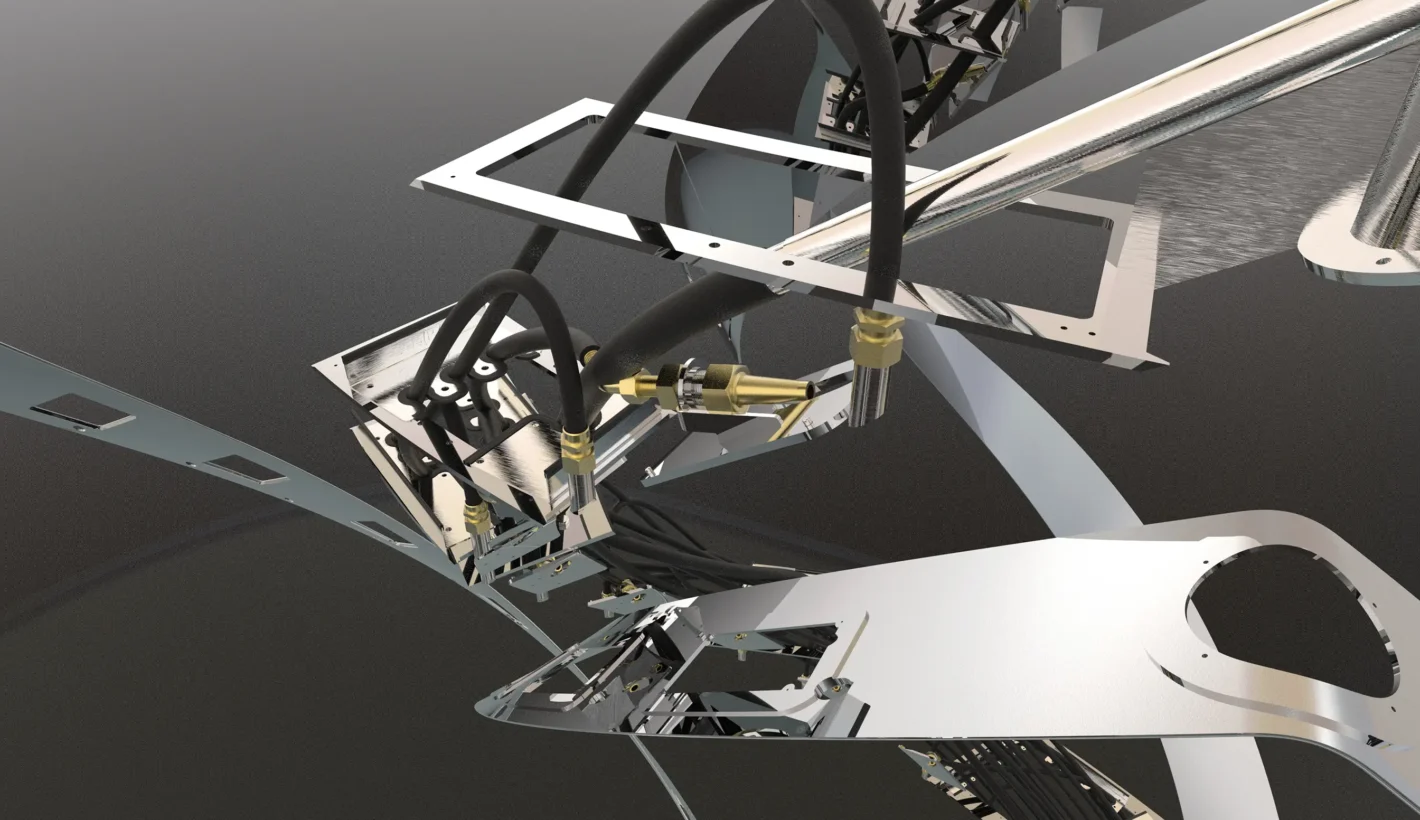
Throughout the project, our design engineering models generated design iterations instantly. This saved valuable time when designing the nozzle hatches across the sculpture’s surface, including their intricate cutting profiles and internal details.

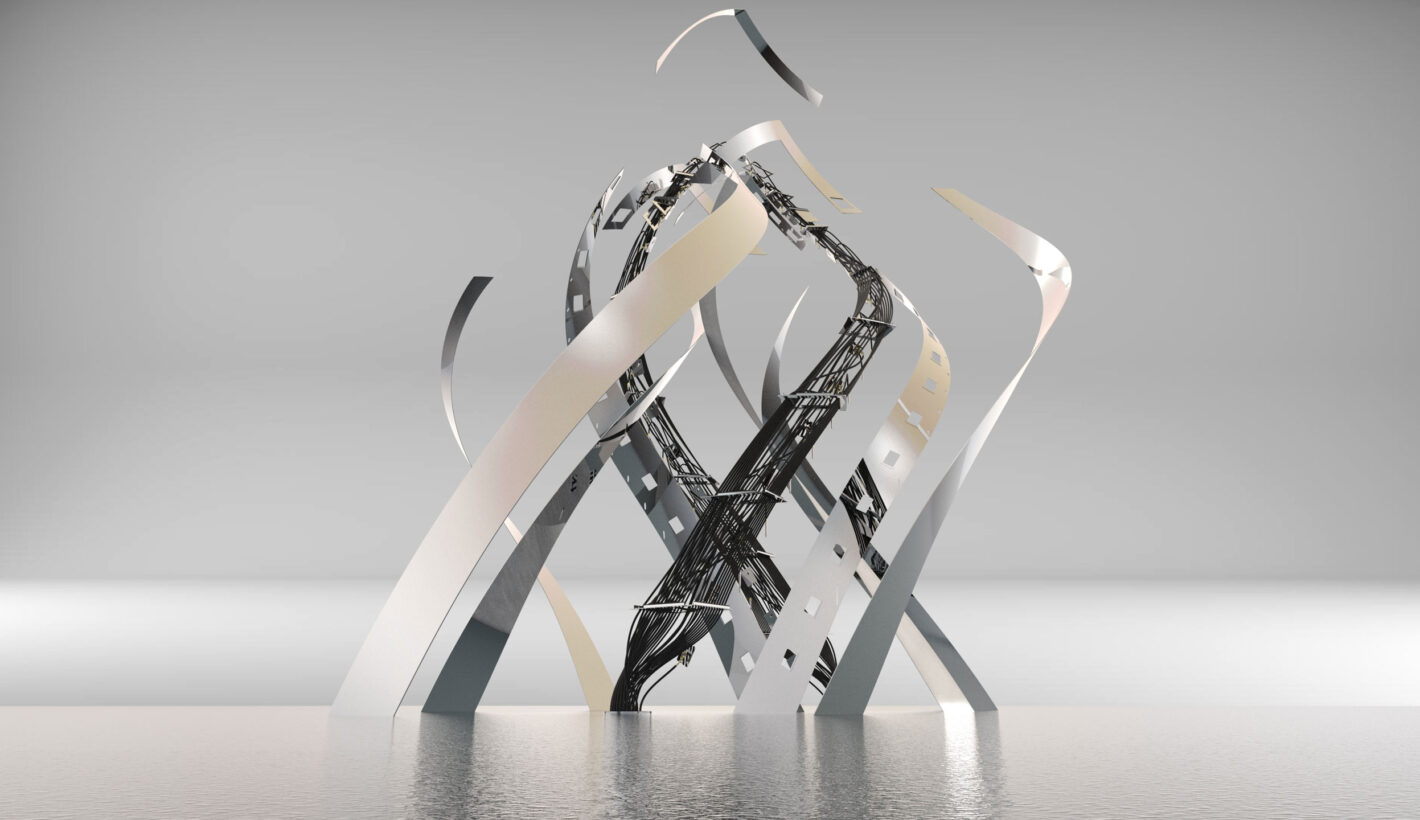
Exploded detail of the full arches sculpture
Close up of the lighting wiring inside the sculpture
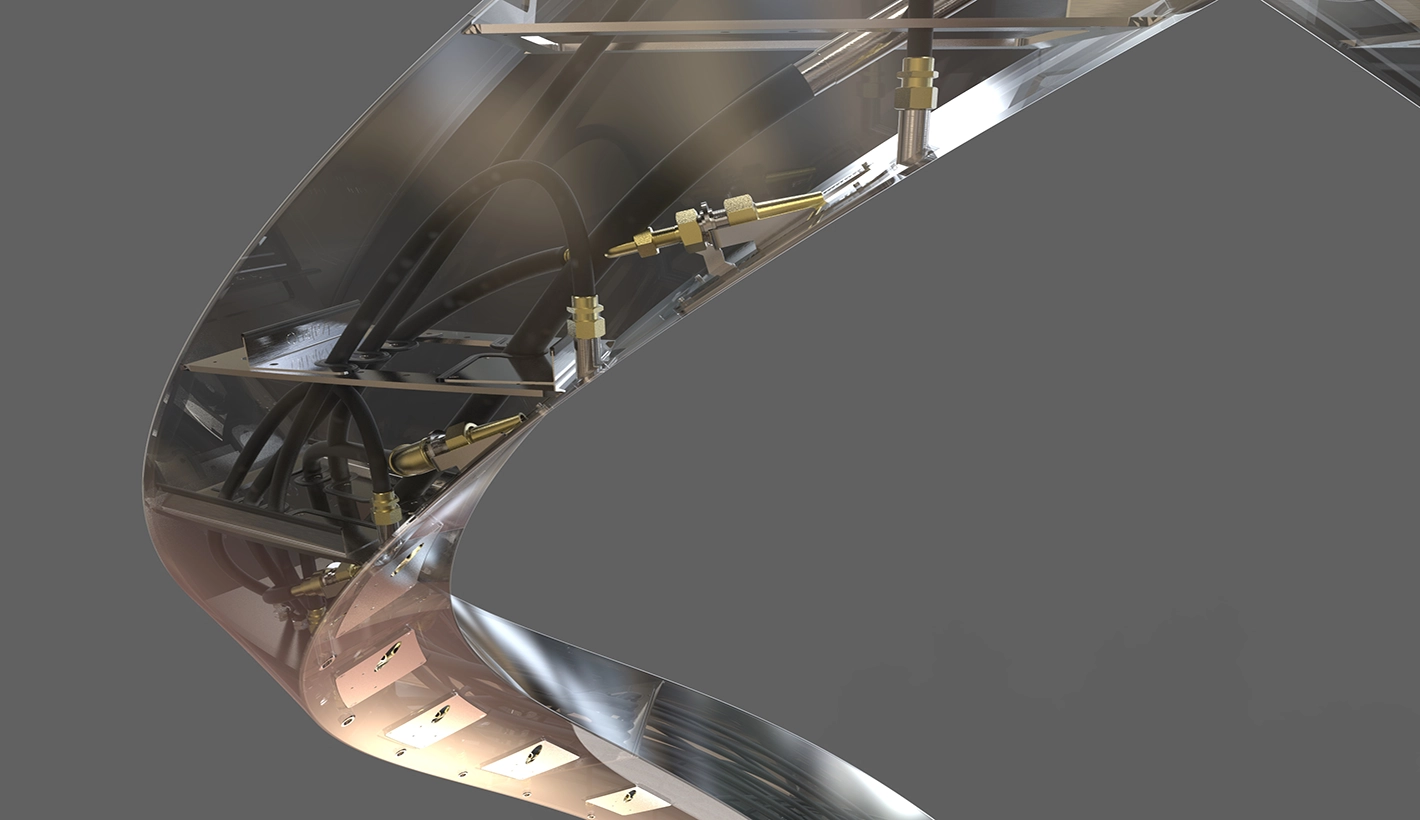
Inside detail of lighting and water cables below view
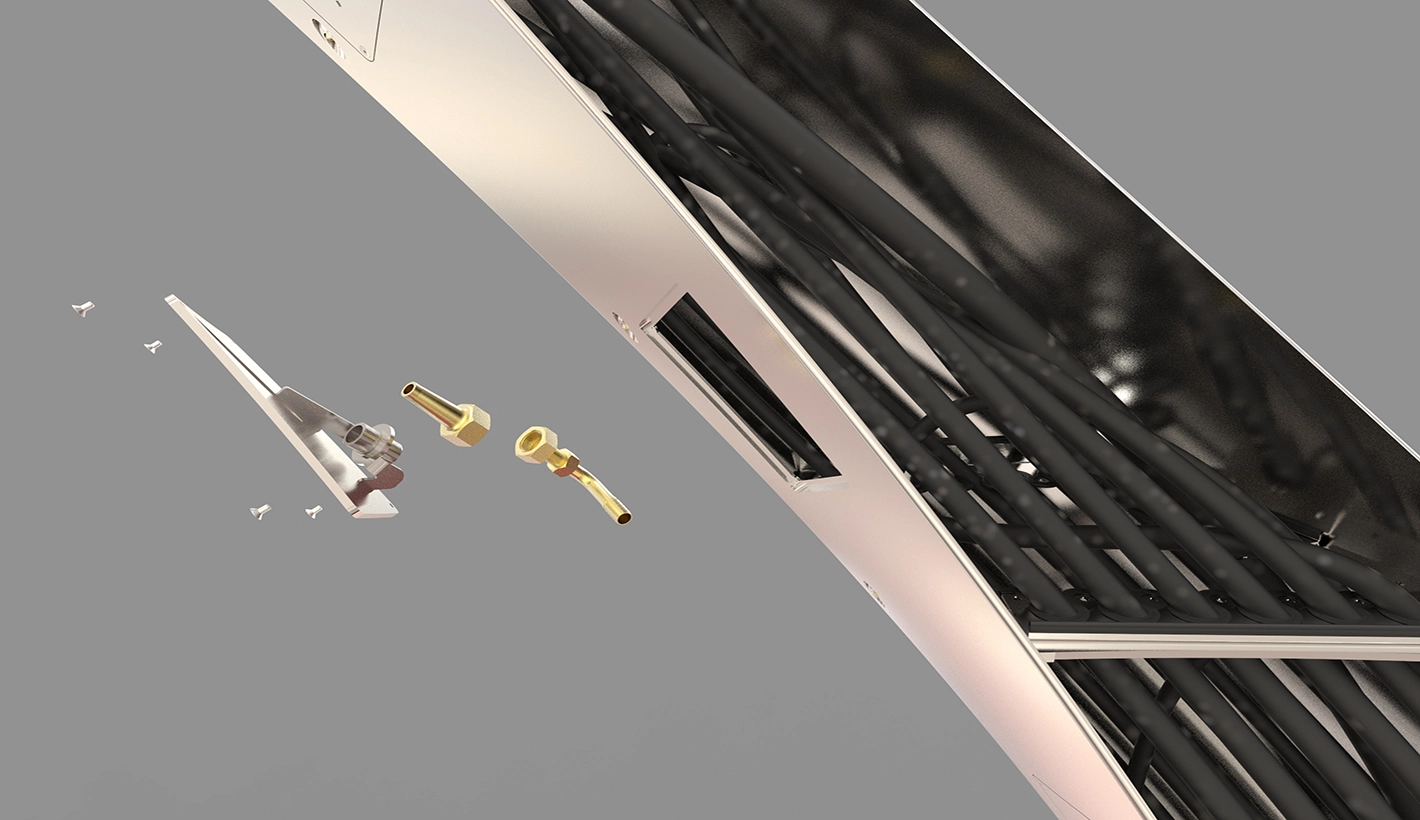
Close up exploded view of components within the arches sculpture

From surface to steel

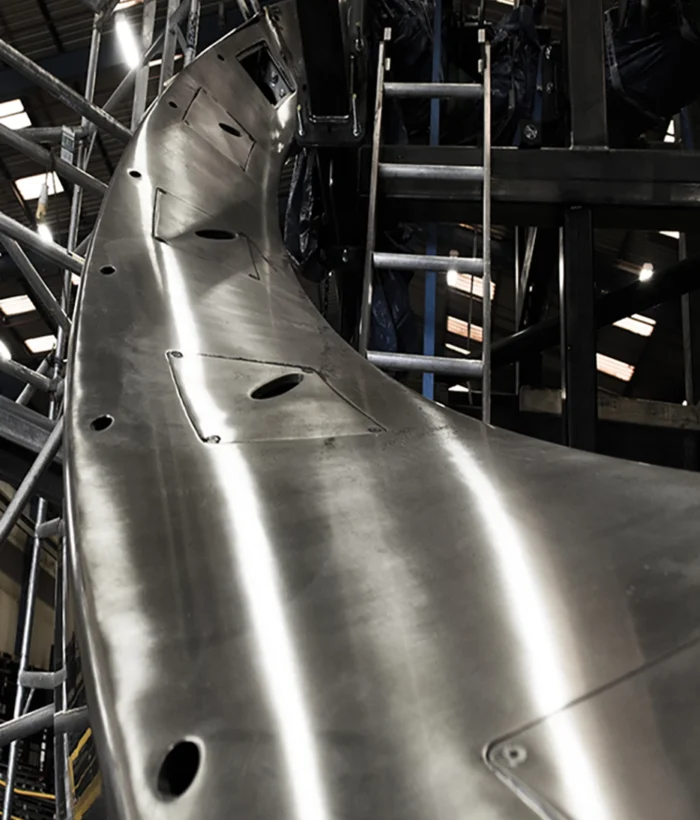
Duplex steel curved sculpture surfaces in manufacture

Turning curves into cut profiles

We designed The Arches of Oman to be made from premium duplex steel: a material that demanded exceptional precision due to its cost and performance requirements.

To reduce the risk of laser-cutting errors, we turned the sculpture’s complex curved surfaces into flat profiles ready for manufacture. We also created an integrated tagging system so each hatch could be fixed accurately to the surface while still in flat-sheet form.

To support manufacture, we supplied precise tolerance data for shrinkage and stretch, ensuring the flat profiles aligned cleanly once formed into curves.


Fitting every piece

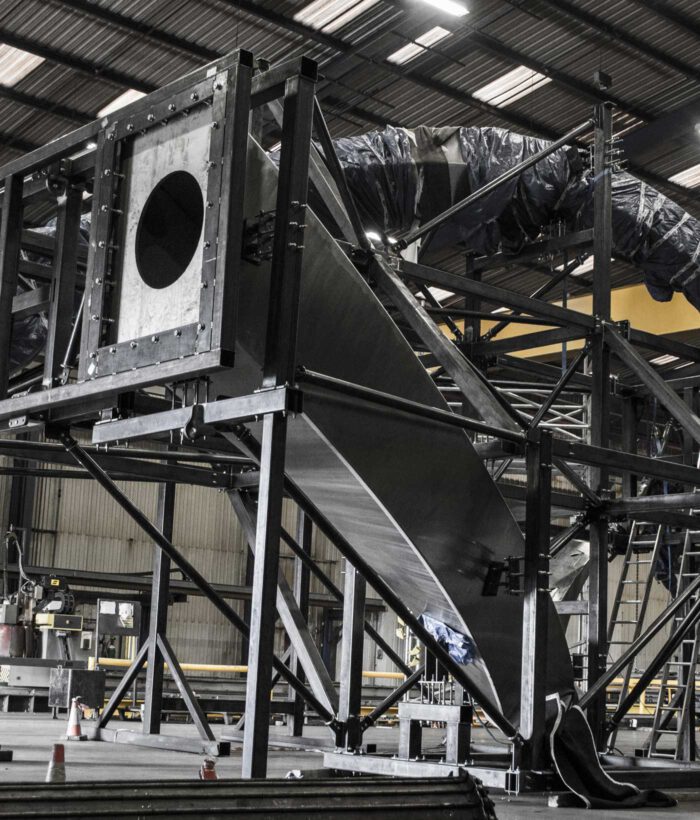
Assembly and orientation rig for the large scale sculpture

Building the jig that brought it together

Before shipping the sculpture to Oman, we needed to understand exactly how its parts would align and lift into position.

To make that possible, we designed and built an assembly and orientation jig that allowed the manufacturing team to position and secure each piece accurately.

We also tagged every component using our design engineering models. This meant the team could only assemble each piece in the correct orientation, which sped up assembly while protecting the sculpture’s structural integrity.


Illuminating the structure

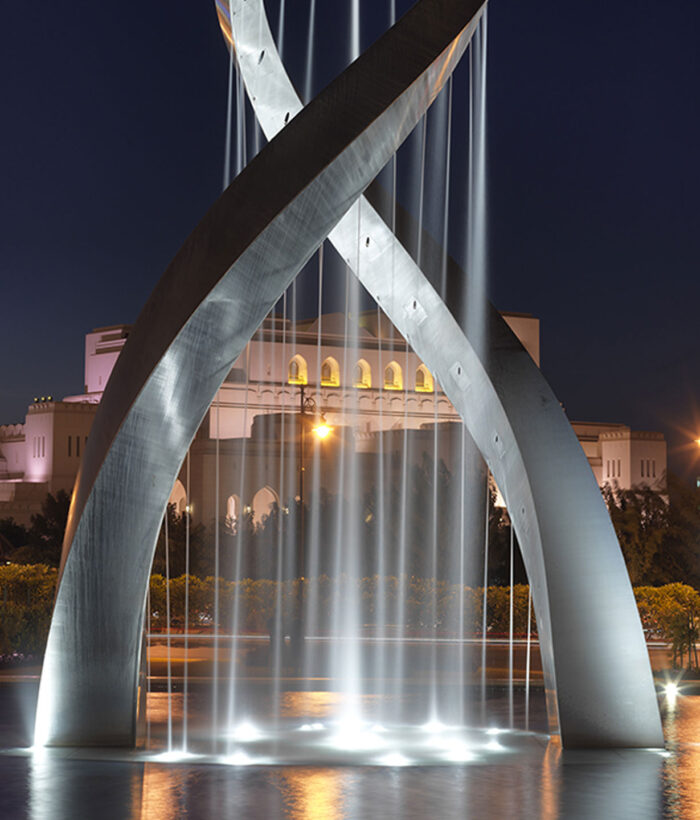
Lit up sculpture standing in water at night time in Oman

Refining the lighting

A defining feature of The Arches of Oman was its lighting scheme, with carefully placed lights submerged in the surrounding pool.

To refine the effect, we created a three-dimensional visualisation of the installation. This allowed the lighting designer to test different positions, beam angles, focal points and intensities, ensuring the finished scheme enhanced the sculpture’s form and presence.


The result


A landmark in the heart of Muscat

From concept model to finished installation, The Arches of Oman shows what’s possible when artistry and engineering work together.

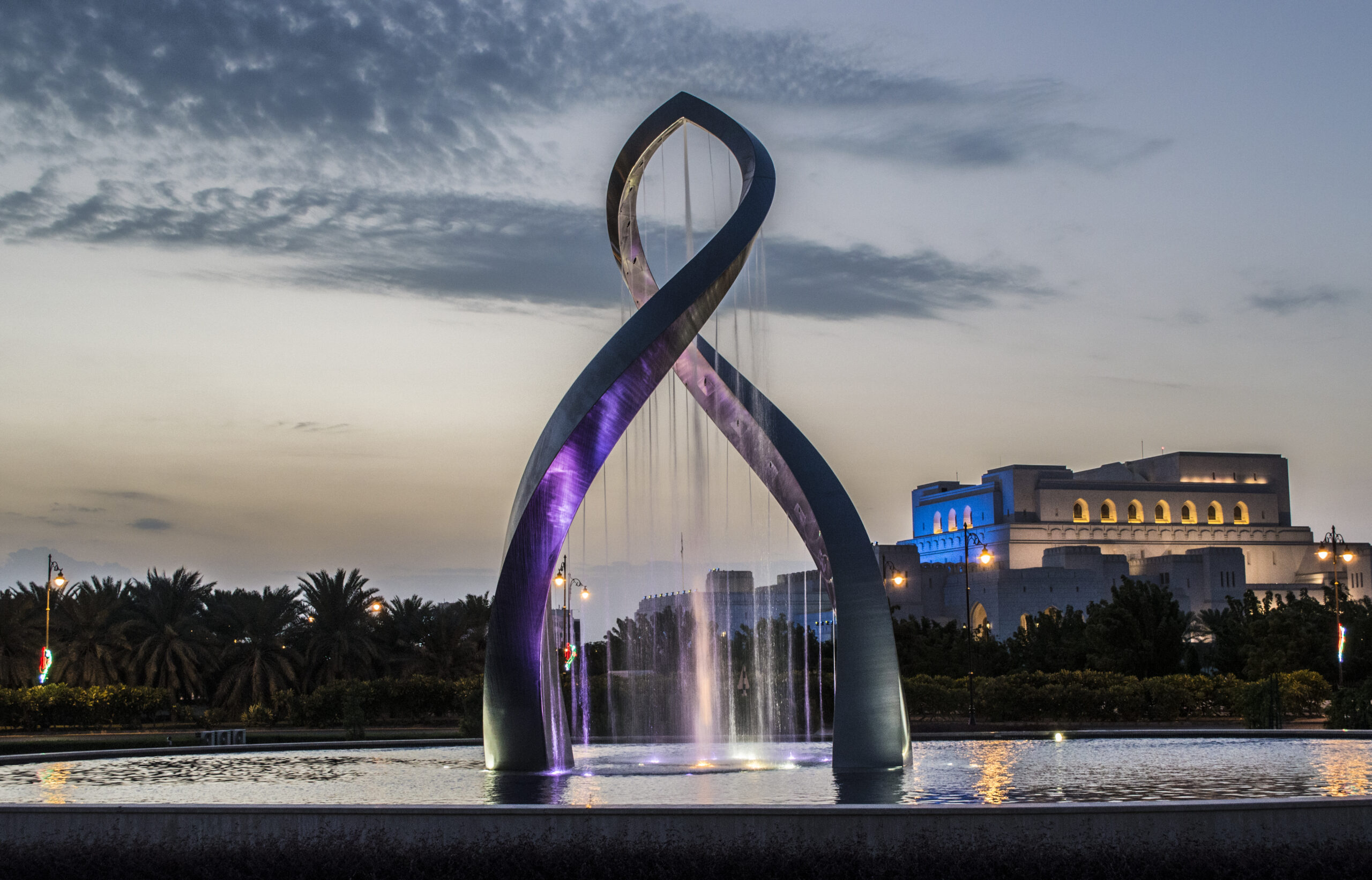
The finished sculpture is a striking public landmark near the Royal Opera House in Muscat, designed to endure and made to leave a lasting impression.
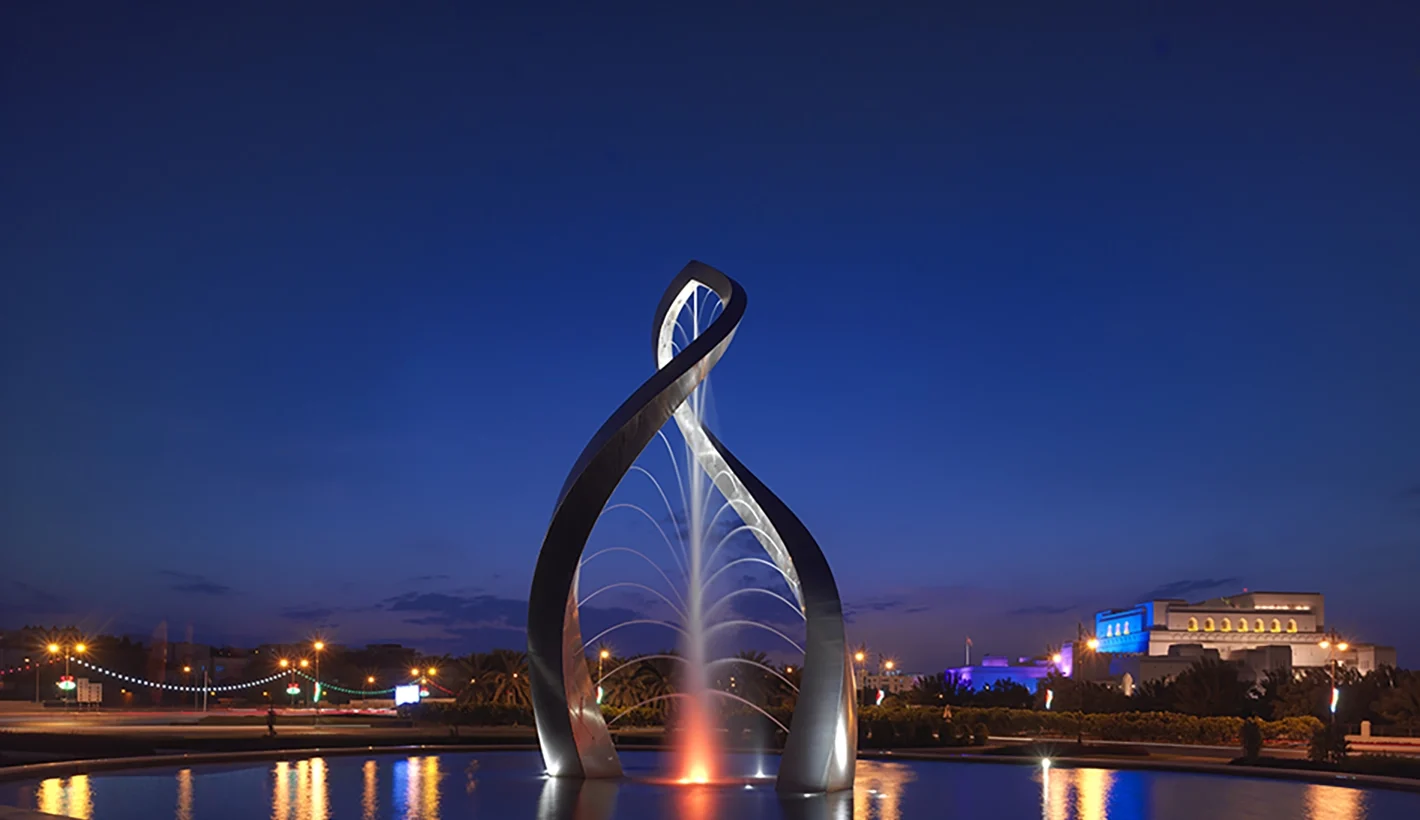
Side angle of Arches of Oman sculpture in water in Oman at night time surrounded by city lights
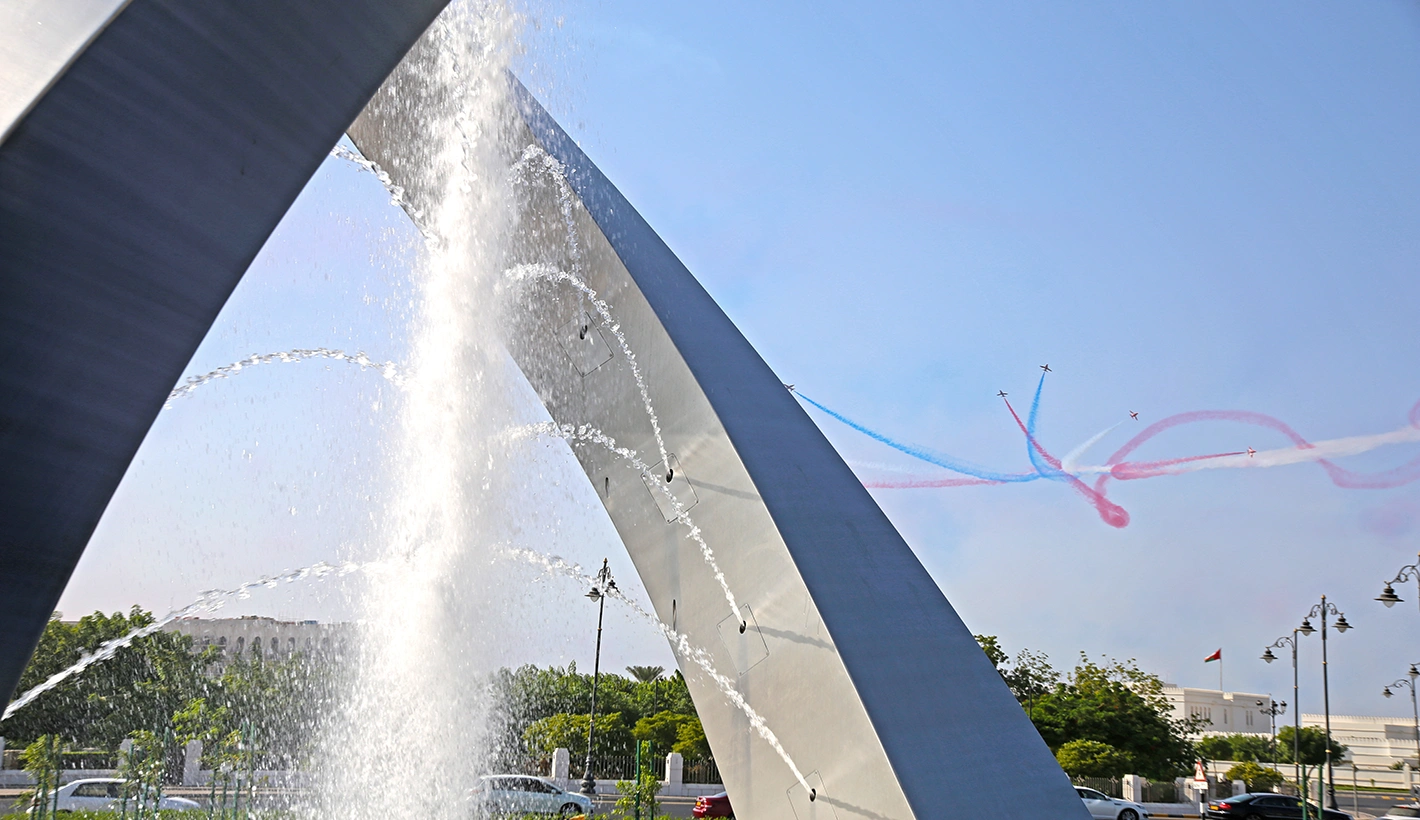
Close up of arches sculpture with Red Arrows flying in background in blue sky
Dusk shot of the Arches of Oman in water in Muscat with building in the background

"Generative Parametrics surpassed my every ambition for this project. From rapid prototyping to the smart solutions used to manfacture this project, the team blew us away at every stage."

Giles Rayner Sculptor, The Cotswolds UK